Alex Donaldson MICFor is one of two candidates selected for the Young Professional Foresters’ Exchange Programme (2024-2025) and is spending three months in Australia working for the Forestry Corporation of New South Wales. Alex has shared a halfway update on his experience on the exchange programme.
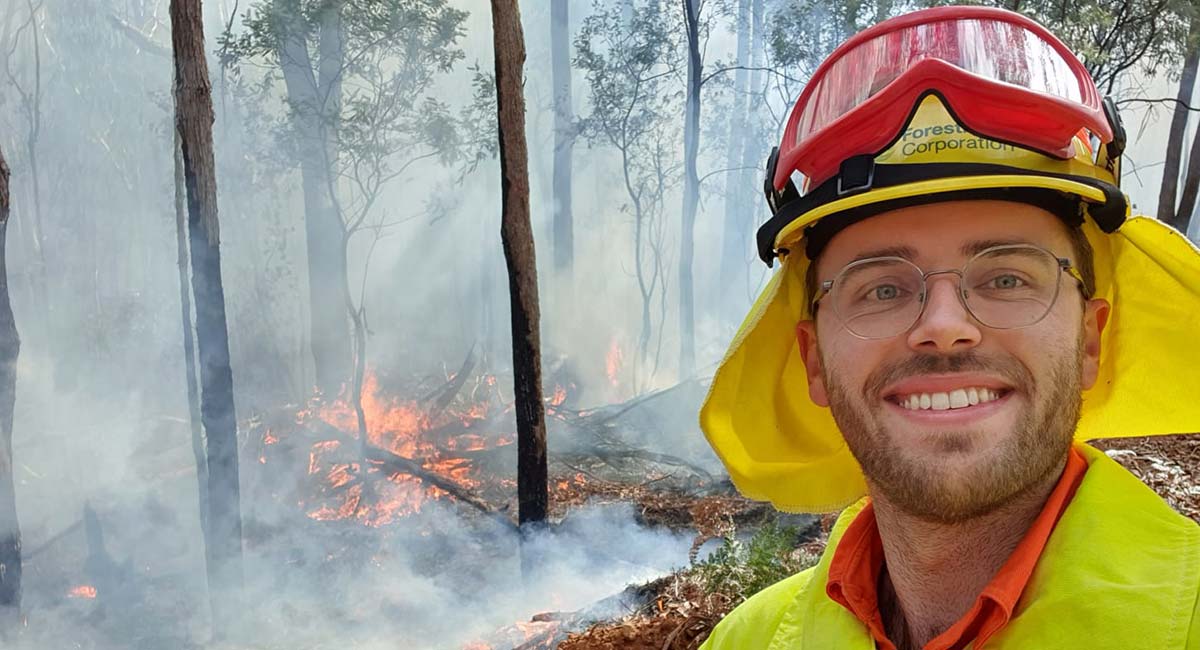
I am now over halfway through my three-month placement, it has been an incredible experience so far! I am feeling very at home here in Tumut, it’s a great place with wonderful people.
I am continuing my ground preparation and competition removal work, but there have been a couple of stand outs over the last four weeks.
Week 5 & 6
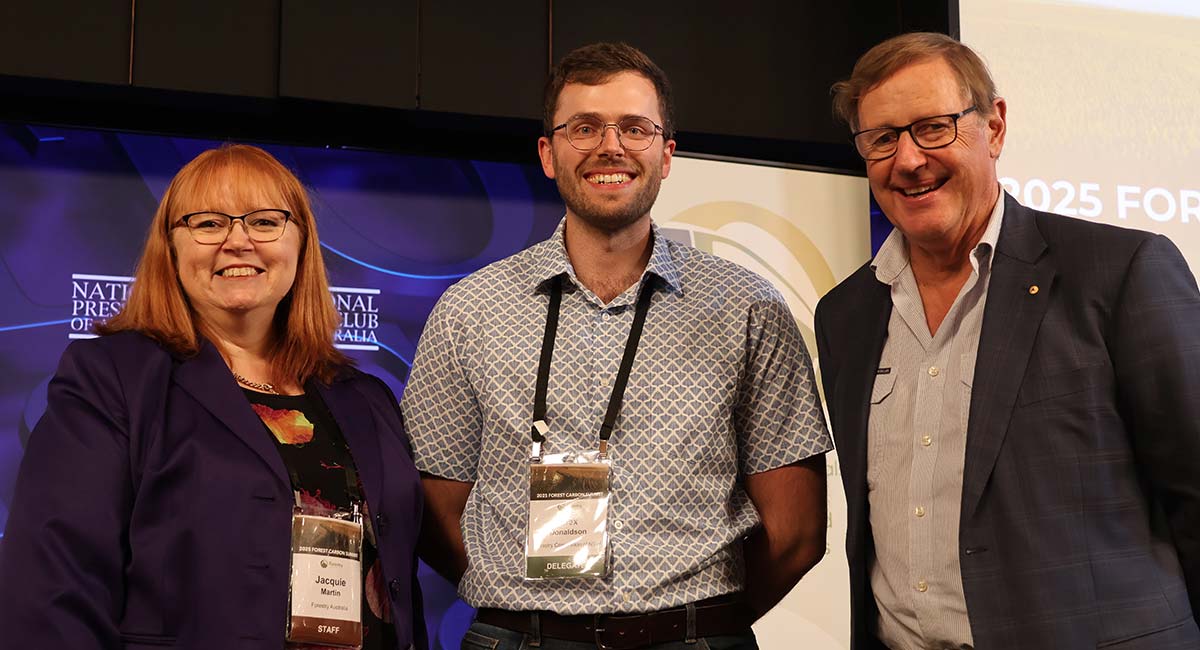
I attended a two-day Forest Carbon Summit with a fellow ICF Emerging Leader, Natalie Meiklejohn. It was great opportunity to catch up!
The attendees were a broad collection of forestry, environmental and finance practitioners from Australia, Tasmania, New Zealand and Fiji. Topics covered carbon markets, natural capital, plantation carbon, biochar and environmental plantings to name a few.
It’s apparent that there are many similarities between the UK and Australia, both are trying to increase confidence and integrity in nature markets to facilitate halting biodiversity loss and addressing climate change. Where they differ is the Australia Carbon Credit Unit (ACCU’s) seem to be able to combine carbon and plantation forestry, by the creation of a new plantation or converting an existing plantation from short to long rotation – more research needed on my part.
I also had the pleasure of meeting Jacquie Martin, the chair of Forestry Australia, who (alongside Jim Wilson) facilitated communication between myself and Forestry Corporation prior to my arrival. I also met Rob De Fegely, Non-Executive Director for Forestry Corporation, who has close ties with the Institute of Chartered Foresters and was instrumental in enabling the exchange between the UK and Australia.
Week 7 & 8
I attended my first hazard reduction burn, this was very late in the season to be burning, but it’s too dry. The Snowy Valleys region is in an official drought, so hazard reduction and windrow burns are high-risk operations.
I was paired with Elijah, a silviculture colleague, due to me not being adequately qualified for solo fire ground operations. As conditions were so dry, we were lighting the edges of the compartment from the high ground, and allowing it to burn down the hill, as this will control the intensity of the blaze. A fire moving at 5mph on the flat will double per 10° of slope uphill and conversely, it halves on the downslope.
To light the fires, we used drip-torches to light the leaf litter. These torches drip diesel fuel through a burning wick, which creates small blobs of fire. We spent the day creating a 30 – 50m firebreak around the whole compartment, as the burnt ground no longer has viable fuel and greatly reduces the risk of the fire ‘spotting’ (jumping) into a non-target area e.g. neighbouring native or plantation woodland. The next day, the fire crews returned to further burn the centre of the compartment.
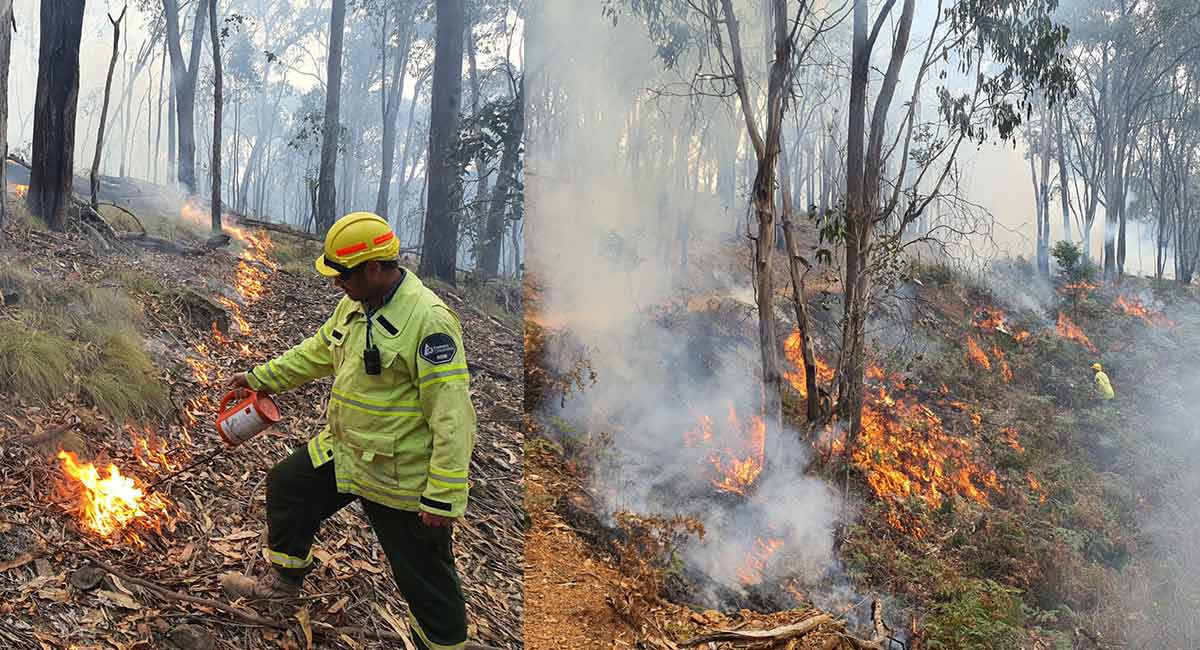
This was my first taste of fire and thankfully, it was a textbook burn. We had no spot overs, and the fire moved at a leisurely pace. However, hazard reduction burns can sometimes lead to much larger fires than intended, as slight changes in the weather conditions e.g. sudden wind direction change, can create unexpected fire behaviour that may get out of control.
I am hopeful I’ll be involved in other burning operations, as this was a great experience.
Weekends
The standout weekend for me this month was Anzac weekend. Anzac Day remembers the Australian and New Zealand soldiers during WW1. During the war, the soldiers would play two-up in the trenches, which was a form of gambling. It’s illegal to play two-up other than on Anzac Day, to commemorate the soldiers.
It’s a game of heads or tails, played with three old Australian pennies. You stake your $10, put it on your head or your bum, and look for someone to take that bet. Whoever wins the coin toss keeps the cash, then rinse and repeat. It was a fantastic experience, 100% authentic Australian culture, I felt very lucky take part and it was great fun!
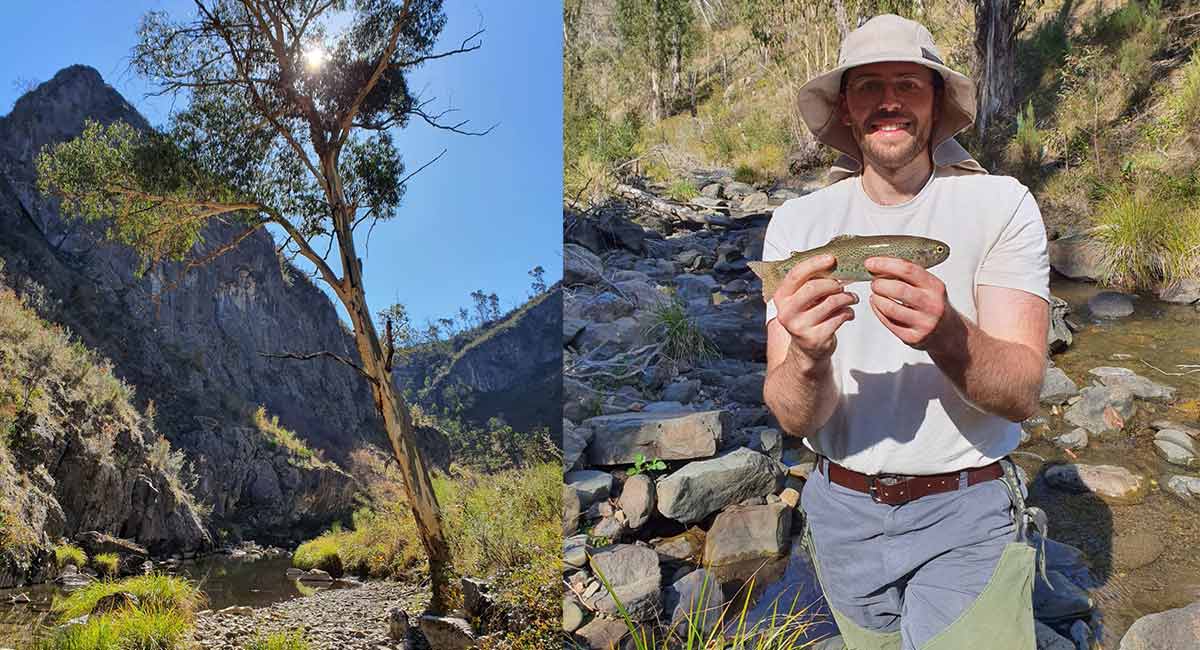
I also caught my first and second ever fish on Good Friday, a couple of trout from one of the many beautiful remote creeks.